Before the first cold front rolls through East Texas, run this 8-point furnace safety check — from carbon-monoxide detectors to the “burning dust” smell — so your first heat cycle of the season is a safe one.
Your furnace has been sitting idle since March. Dust has settled on the burners, spiders have moved into the flue, and that filter you meant to change in the spring is still in there. Firing it up cold on the first chilly night of the season is how a lot of East Texas no-heat calls — and a few safety scares — get started.
Spend 20 minutes on this checklist before you flip the thermostat to HEAT.
1) Test every carbon-monoxide detector. Push the test button on each one, and replace batteries while you’re there. If you have a gas furnace, gas water heater, or attached garage and you don’t own a CO detector, buy one today and install it outside each sleeping area. CO is colorless and odorless — a working detector is the only warning you get.
2) Swap the air filter. A clogged filter starves the furnace of airflow, which makes the heat exchanger run hotter than it was designed to. Over time that stress is what causes cracks — and a cracked heat exchanger is a carbon-monoxide risk.
3) Clear the area around the furnace. Furnace closets and garages tend to become storage over the summer. Move paint cans, cleaning chemicals, cardboard boxes, and laundry at least three feet away. Gas appliances need combustion air, and flammables don’t belong anywhere near a burner.
4) Check the flue and vent pipe. Look where the metal vent leaves the top of the furnace. It should be snug, sloped upward, and free of rust holes or gaps. Outside, make sure the roof cap or sidewall vent isn’t blocked by nests, leaves, or wasp activity.
5) Expect a little “burning dust” smell — and know when it isn’t normal. The first run of the season usually smells dusty for 15–30 minutes as the burners cook off summer buildup. Open a window and let it clear. A rotten-egg (sulfur) smell means a possible gas leak: leave the house, don’t flip switches, and call the gas company from outside. An electrical or burning-plastic smell that doesn’t fade means shut it off and call us.
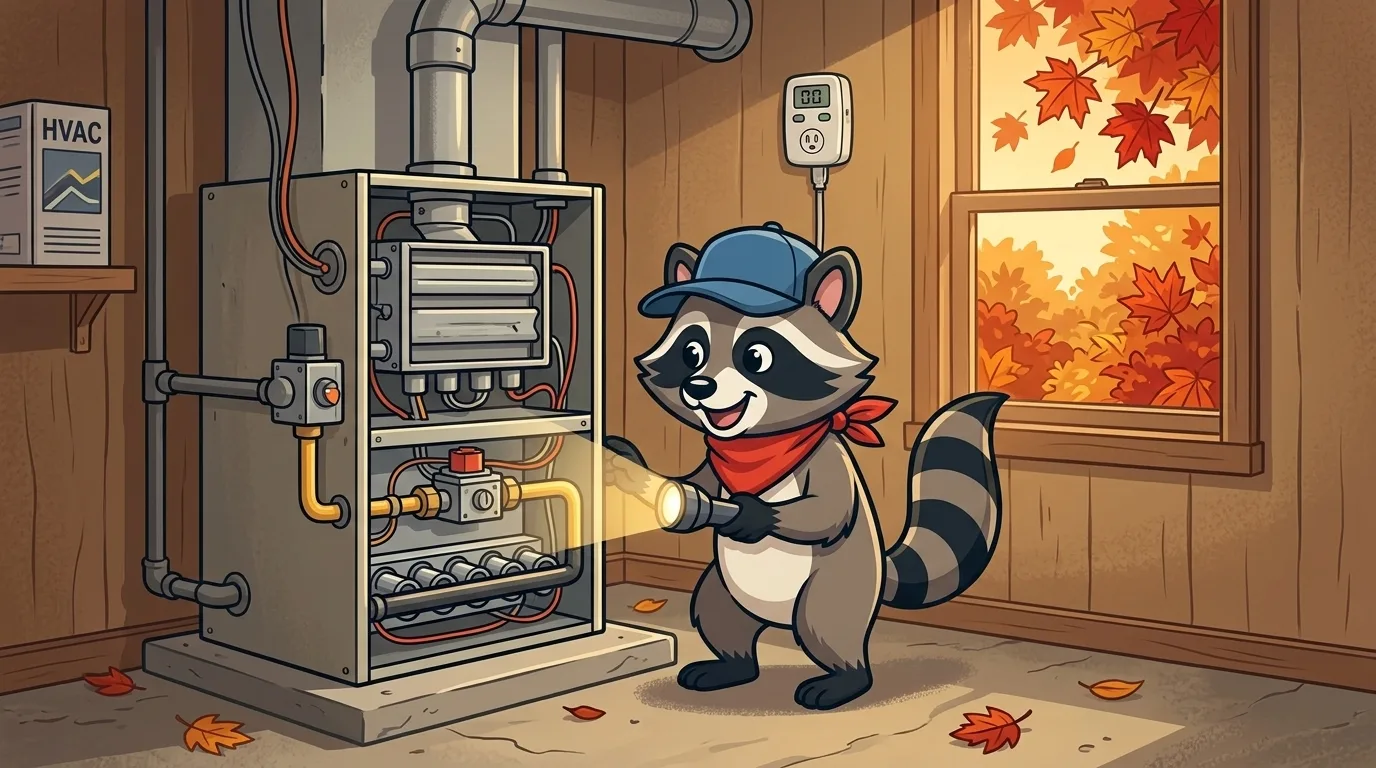
6) Watch the flame. If you can see the burners through the sight glass, the flames should be steady and mostly blue. Lazy, yellow, or orange flames that dance around point to incomplete combustion — a tune-up issue and a safety issue.
7) Listen on startup. A soft click, a whoosh of ignition, and the blower ramping up is normal. Loud bangs or booms (delayed ignition), metal-on-metal scraping, or a furnace that starts and stops every few minutes all deserve a professional look before you rely on it all winter.
8) Book a professional heating tune-up. Some things you simply can’t check with a flashlight: heat-exchanger integrity, gas pressure, flame-sensor condition, inducer motor draw, and combustion safety. Our certified technicians inspect all of it during a Heating Tune-Up, and Premier Club members already have theirs included.
A safe heating season starts before the cold does. Run through this list, give us a call at (903) 765-7629 for anything that looks or smells off, and enjoy that first warm morning with peace of mind.
Have HVAC questions?
Our East Texas team is here 24/7. Call us anytime.